Wednesday, December 11, 2013

Rant n' Review: The Tim Ferriss Experiment ... Awesome AND Scary


Tim Ferriss, author of the 4-Hour Work Week, 4 Hour Body, and 4-Hour Chef recently launched a new show, The Tim Ferriss Experiment, on Upwave.  (You can also find it on iTunes.) In each episode, Ferriss will take on the task of learning a new skill and getting good enough at it in five days to prove his abilities in some type of high-profile demonstration. The show follows some of same basic principles also covered in JoshKaufman’s The First 20 Hours.

Basically, the idea is that by following a specific process, you can take anything you want to learn and in a short amount of time, develop a “good enough” level of skill/knowledge to get by.

It’s a interesting premise. As I read Kaufman’s book, I found the idea inspiring. He takes a number of things he wants to learn about – like yoga, playing the game Go!, playing the ukulele, and by dividing up the work of learning in a specific way, he gets good enough to feel like he can check the item off his list of things he wants to do.

In Kaufman’s chapter on learning the ukulele and how part of what makes it work is that you have to set some pretty high stakes for yourself. In his case, performing at a speaking event.

Segway to The Tim Ferriss Experiment…


Tim Ferriss is an amazing human example of transparency and being open to the possibility of failure. I love the fact that he’s hacking his own life in public and that this is how he makes his living. I also think the idea of outsourcing the stuff you don’t like doing is great, in theory… but whose going to change the cat litter? (An argument for another post…)

In the initial episode of The Tim Ferriss Experiment, Tim decides he wants to learn drums. The program has a very Myth Busters/How It’s Made vibe. Ferriss has 5 days to learn to play drums well enough to play “Hot Blooded” on stage with Foreigner in L.A. He’s got a few people helping him out, including the rhythmic god, Stewart Copeland, drummer for the Police. Ferriss also has a drumming teacher from The School of Rock in LA help him out. This is the part where the show reeled me in like a starving fish. The line at the bottom of the screen about drumming together being like paired programming. I’m not really convinced it is 100% accurate, but it was a cool geek tidbit. (And with any luck, the masses will very soon begin misusing “pairing” with the same degree of ninja like expertise they employ in misusing the word “agile”.)


In another segment of the show, Ferriss talks about how he always tries to find things to do that are scary for him because it is a way of inoculating himself against the fear of failure.  This is also quite brilliant.

But then the scary part...
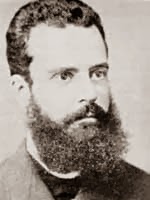

Vilfredo Pareto
Ferriss has a massive world-wide audience. People who read his books look to these books for advice on how to improve the way they approach their work in order to make their lives better.  In his 80/20 approach, Ferriss is going to be learning to do new things in each episode. He’ll get “good enough” at 20% of something to deliver 80% of the value.  This is more, or less the same approach Josh Kaufmann promotes. And I think, if you are applying it to a hobby, that is great. But, my deep, dark, wake me shaking in the middle of the night fear, is that people are going to see Ferriss applying this to pretty high profile gigs (like being a professional drummer), and a new trend will emerge. We will suddenly have an ocean of professionals whose goal is to just learn 20% of a skill so they can get by stumbling through 80% of a task or job ... 

and I may have to work with people who think that is ok. 

And that makes me wanna get my Gran Torino on...


Sam Barnes has turned to the Dark Side


Click here to go directly to the podcast

My favorite presentation at DigitalPM2013 was given by Sam Barnes. After years working as a PM in Digital, Sam turned to the DARK SIDE… he became a client. Suddenly, he was taking bids from all the companies he was used to competing against. Given his years of experience leading projects from the agency side of the table, he walked into it thinking it would be a bit of a cake walk. What he found was maybe not so much with the cake … or the walk.

In this podcast interview Sam and I talk about his experience being on the client side, his presentation at DigitalPM 2013, the challenges for those working in the Digital PM space who have to be able to work in both waterfall, and Agile, but find that neither really fits as well as one would hope and the upcoming DigitalPM UK conference

If you’d like to learn more about Sam:
He’s got him some blog
He’s on the twitter
And his presentation from Digital PM 2013 is here

Wednesday, December 04, 2013

Designing Together - Podcast Interview with Dan Brown


Click here to listen to the podcast

At DigitalPM 2013 I had the chance to meet Dan Brown, who is a founder and principal at Eight Shapes, a Washington D.C. based user experience consulting firm. Dan is also the author of Communicating Design and Designing Together and at the conference he facilitated a session using a game called Surviving Design Projects that he developed to help improve communication with design on projects where there is conflict.

In the interview we discuss Dan’s perspective on the value Design brings to the team and how we can improve our interaction with them. Dan also shares his thoughts on the challenges facing the role of project management in the digital space.

One of my lightbulb moments during this conversation was that in many ways, it seems as though the design side of the house and the agile software side of the house are headed down the street in the same direction, but on opposite sides of the street. It raises the question of when/how there will be a convergence in how the two sides approach their work.

If you’d like to learn more about Dan, here are some links that will help:
Eight Shapes
Twitter
Amazon

Wednesday, November 27, 2013

Øredev 2013: Resetting the Bar


If you have ever attended a professional conference, one of the most common things you hear goes something like this:
"Oh, I don’t actually get much out of the sessions. I really just attend to network. The most important part of these things is what happens in the hallways in between sessions."
In fact, this sentiment was one of the main things that led Harrison Owen to start Open Space  as a more (less) formal way of holding a conference.
One reason professionals often attend conferences is for self-validation. Being surrounded for a few days by peers who share the same knowledge base you do and attending sessions that confirm that you all do in fact know the things you need to know can be very reassuring.

If you reach the stage where that becomes boring, you, like many will bail on the sessions and spend time in the hallway chatting with your colleagues. This is the portion most people say they find most valuable. It is a great way to extend your network, check in with others on your ideas and ensure that your face and name are a recognized entity in your professional community.

The question is, is this really the best that professional conferences have to offer?

This fall I attended two events that changed the way I look at conferences. The first was DPM 2013, which I’ve already written about here. It exposed me to a segment of professionals in the PM field who are working towards what may become a new way of approaching work. It includes aspects of agile and traditional pm, but is really neither of those things.

This November, I had the good fortune to be able to present at Øredev 2013 and this is the event that has had the most significant impact on how I view conferences now. This was my 3rd time attending Øredev. It is always enriching and challenging, but this time, I found myself very reluctant to miss any of the session. Each talk I attended introduced me to a new batch of ideas, concepts and ways of working that were unfamiliar to me. Each speaker I watched present, challenged some assumptions or practices I hadn’t previously thought to question. As someone who was firmly in the “It all happens in the hallways” camp, this was a new experience for me. I was more concerned about missing something my brain needed than I was about hanging out in the halls networking. Any decent conference will offer an attendee a chance to learn something, but what makes Øredev stand out is that it requires something more than information consumption.

The best way to sum it up may be by paraphrasing a conversation I had with another attendee at Øredev following the "Tekhnasthai" keynote given by Anna Beatrice Scott. He said:
"As I was watching her and listening to her, I found myself becoming increasingly frustrated and angry. Then I realized that what was making me frustrated and angry was not her, or her message, it was that she was was challenging my beliefs about work and how to approach it."
IMHO, this is the type of bar against which conferences planners should be measuring themselves if their events are going to retain value going forward. And as attendees, we should use the same bar. Going to conferences where we can have our assumptions validated or where we can be passively fed is not enough. In order to grow the profession and grow in our practice of it, we should always be seeking out events that will push and challenge us and leaning into the scary bits.

Friday, November 22, 2013

A DigitalPM Podcast interview with Carson Pierce from YellowPencil

One of the folks I had pleasure of meeting at DPM 2013 was Carson Pierce. Carson is the Director of Project Management at Yellow Pencil, an end-to-end service provider for web development based in Edmonton and Vancouver.  He’s also one of the folks who are helping the DPM community take root and grow.

Carson and I discussed DPM2013, the challenges facing the digital PM community with respect to the Agile vs. traditional question, and the group he has formed of folks in this space who are actively trying to find the collaborate on finding the optimal way to solve the unique each of them faces.


Tuesday, October 15, 2013

Scrum in the Waterfall at DigitalPM 2013 (slides)

Digital PM Summit 2013 - Day 1 Recap

Day 1 of the inaugural Digital PM Summit is in the books and it was impressive. The event is being held in Philadelphia and is billed as "The first conference for a community of people who manage all things digital". I've attended and spoken at a lot of IT and PM related conferences in the past and there is definitely something unique going on here. There are a lot of conferences that focus on design and a lot that focus on development, and what they offer covers a wide range of subject matter and are delivered in a variety of formats. There are also a lot of PM conferences that focus on project management from the more formalized approach to managing work. And there are the Agile conferences which cut a slice across those areas. However, those conferences don't really speak to the audience that is present here in Philly this week. For the folks who manage projects at digital agencies, there is a different need. The agencies tend to be small to medium sized businesses with projects that can last anywhere from a month to a year (on average). The teams tend to be smaller in nature and many of them are caught in a space where a "just do it" can work for awhile, but it brings a lot of the pains you'd expect (stress, marathon last minute efforts, and technical debt). They could go the route of moving towards a more formal approach (like PMI), but the process burden doesn't really fit with the needs of the client or the work culture. They could also address a lot of their challenges with Agile, but this is not an ideal fit for many of their clients who are often more traditional minded and aren't compelled to change. So, what they end up with are a need to be able to manage work using a variety of approaches based on the needs of each specific project and client. At a larger organization (upwards of 50), it might be possible to bear the overhead of staff who are expert in different areas and approaches, but most of these organizations have a more lean approach that requires them to be able to develop a broader range of options in how they manage work. Coupled with that is the fact that the medium they work in is in a constant state of flux and they are expected to always be on the edge of what is the new, best way of designing things that leverage the latest tech.

The PMs in this space have to have one eye on design (maybe one and a half) and the other eye on technical practices. And somewhere in the middle, they still need to develop PM skills. Going back 10-20 years, my experience in this space was that the project management side of things involved a lot of floundering around, establishing a new approach every time things went really side-ways. The agencies that garnered all the attention back in the boom were places like Razorfish that kept a keen eye on the design side of the medium. That was, and remains, a valid approach, but this field has grown and evolved and is hungry for a better way. Unfortunately, none of the primary options can holistically solve the challenges they face.

What I have found to be truly unique about this event is the programming and the attendees. The way yesterday began offers a great example of what I believe makes this event a valuable and interesting alternative. The day started with Jeffrey Zeldman giving a talk that was rooted in design and UX standards. It was followed by Jared Ponchot that also skewed towards design as well, but dealt a lot with the creative process and how to approach creative work. The third speaker was the Conference Chair, Brett Harned, who gave talk called "How to be a Better Project Manager". Each of these talks would be at home in a variety of separate conferences, but putting programming like that together for this sold out event is what set the tone. These are not PMs who want/need to spend an hour learning about a better way to do Earned Value or, Critical Chain or managing projects that deal with Sarbanes-Oxley, CMM, ISO or (insert process here). These are design centric PMs who are deeply involved in the creative process who, while they may not self-identify as servant leaders need an approach that enables and supports their creative and technical leaders. Agile has a place here, but these folks are not Agilists. Traditional practices have a place here, but these folks are not PMPs (mostly). They are also not (mostly) designers or developers. They are creative PMs in the digital space. While it would be great to be able to develop expertise in each individual area (design, development, traditional PM and Agile), the years of work that could take would definitely be at odds with the realities of serving their clients.

One of the things I found most impressive yesterday morning was that for during the first 3 talks, there was the level of attentiveness and engagement of the people present at the conference. That is not to say that people who attend other conferences aren't engaged and attentive, but this was different. My experience has been that at a traditional PM event, career PMs look for a few new ideas and go to validate what they think they know. At an event like Øredev, technically savvy knowledge workers who are more on the advanced end of the spectrum go to be challenged with new ideas and ways of working that are often a few years ahead of the curve. At an Agile Conference or Scrum Gathering practitioners of Agile get together to work on how to get better at applying Agile. What I saw yesterday was a room full of people who were all there to find better ways to help the work that are fully respectful and supportive of the creative and technical process. They were not so much looking for ways to change how others work, but more for ways to change how they approach their own work.

Five or ten years ago, I'm not sure if something like this would have sold out so quickly to an audience that includes attendees from all over the US and some from Europe as well. But this community of Digital PMs is a segment of the PM community is definitely hungry for the opportunity to share and hone their unique spin on the field of project management.


Kudos to Greg Hoy, Brett Harned, Allison Harshbarger and the folks at Happy Cog for having the vision to create this event and for having done such a great job with it. #bigdamnheroes

Thursday, October 10, 2013

Language is a virus from outerspace


http://www.garyschoichet.com/PORTRAITS/images/0012%20william%20burroughs%20.jpg
William S Burroughs by Gary Schoichet
"Language is a virus from outerspace"
 William S Burroughs

Language is a tricky thing. It is a broken, imperfect system of encoding and decoding a message. If the encoder and the decoder have the same key, the message may be heard and understood as it was intended. If the encoder and decoder have different keys… bad things.

The encoding and decoding takes place on many levels and often carries around a lot of baggage.

If I am in a conversation and someone says:

“Yo, hand me that jawn over there. “

It probably means they are from, or have spent a significant amount of time in Philadelphia.

If someone says:

“We need to assign some resources to work on this project.”

http://fc07.deviantart.net/fs70/i/2013/046/3/d/heisenberg__walter_white__png_by_nathown-d5v0h3f.pngIt probably means they have been trained to manage or work with projects using a traditional (waterfall) approach.

When I took my CSM training I sat in a room full of 40 software developers. When I referred to people as “resources”, they boo’d me... literally.

In Agile, and in traditional project management we both use resources on our projects. But, because Agile takes care to focus on “Individuals and Interactions”, resources are generally considered to be things that do not have opposable thumbs and a capacity to binge watch five seasons of Breaking Bad in a 3-day weekend.

The way we use language infects our interactions with individuals. In this TED Talk, Diane Benscoler talks about being deprogrammed from the cult she had joined as a young woman. In the talk she refers to a “viral memetic infection”. This is, simply put, how language can be utilized to hack the brain.


In working with people on a project, if I regard them as individuals I work and interact with, I am likely to behave differently towards them then I would if I were to regard them as resources I expend to get work done (like a stapler). This can appear in very subtle ways – or, at least, ways that seem subtle to the non-Agile.

http://www.virtualstapler.com/office_space/images/milton_holds.jpg

When I first began working in Agile I stumbled over a lot of similar encoding/decoding issues. The more experience I got with it, the more I learned how important it was to translate ideas before they passed my lips. As I would speak with someone about the project I was still thinking in waterfall, but speaking in Agile.  I’d think “resources” but say “team members”. And that helped a little. At least, I thought it did. To other PMs, it sounded very Agile, but being a little further on with it now, I do feel it is fair to say that language aside, intent shows through. If I am thinking “resources” but saying “team members”, the fact that I have not truly bought into the Agile mindset still shows through to those who do think of individuals and interactions.

http://www.acminc.com/wp-content/uploads/festrunk.jpg
If you are in the process of trying to transition from traditional to Agile, it is important to bear this in mind. There is often a significant difference between how we perceive ourselves and how we come across to others. I may believe I am able to fit in with the Agile folks once I learn to speak their language. Certainly that is a massive improvement over not doing so, but being able to speak the language and adopting the behaviors and value systems are not the same thing. One may lead to the other, but being aware of the fact that it is an ongoing process is an important art of not destroying your credibility along the way. 

Friday, October 04, 2013

An Interview with Mike Vizdos

I had the chance to interview Mke Vizdos for a podcast recently. You can find it here.

Even if you aren't familiar with Mike, there is still a good chance you are familiar with his work. Here is a list of some of the things he's been up to recently...

Mike Vizdos is  ____(please select from below)____________ 
 X  A Father of two great kids and Husband of an incredible wife
 X  A Certified Scrum Trainer
 X  An Agile thought leader / author who has been talking about enterprise level Agile adoption since before it even occurred to most of us
 X  All about Implementing Scrum
 X  Entrepreneur
 X  One of three guys in a shop working with Lean Startup 
 X  Co-founder and Community Builder of Gangplank RVA  
 X  Podcaster (will link to)
 X  Author of a children’s book illustrated by his son
 X  Founder of Real Scrum Jobs (will link to)
 X  A really nice guy
 X  Way busier than you…
 X  A walking example of how following your passion around certain areas of focus can help you establish an agile work life that is creative, experimental, invigorating, and of course, full of failure in the best possible way.
 X  Is working on applying what he learns daily using “this” cartoon as a reminder: